
 Introduction
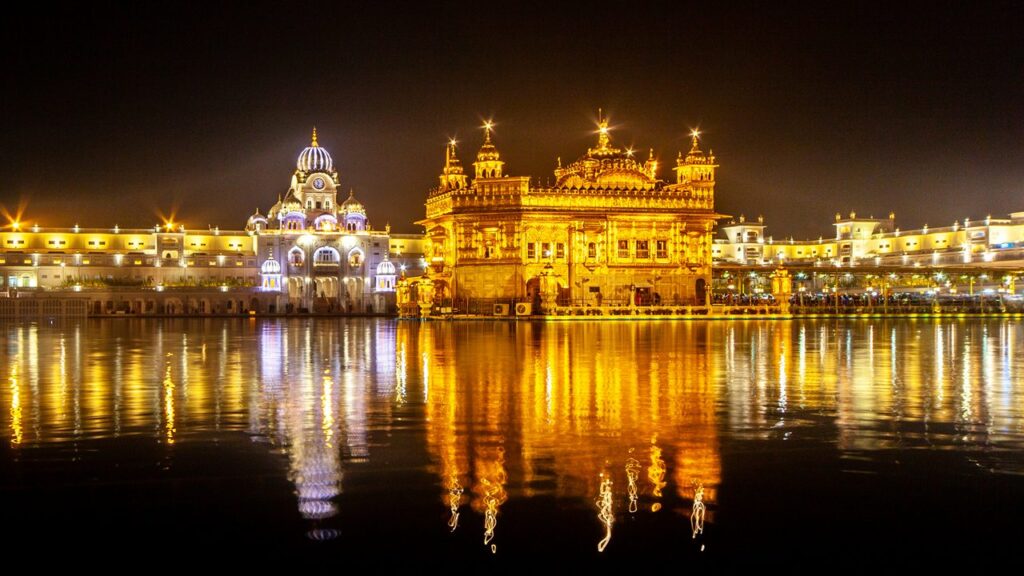
Having facilitated countless pilgrimages to Sri Harmandir Sahib over the past decade, we’ve learned that visiting the Golden Temple transcends typical tourism—it requires understanding Sikh traditions, appropriate conduct, and the historical context that makes this site sacred to millions. Our Amritsar tours are designed for travelers seeking meaningful spiritual engagement, not just photographic opportunities.
Amritsar presents unique travel considerations: the Golden Temple operates 24/7 with continuous Guru Granth Sahib recitation, the langar (community kitchen) serves 75,000+ meals daily requiring visitor flow management, and the Wagah Border ceremony follows strict military protocols. Our expertise navigates these nuances respectfully.
The Golden Temple Experience (Expert-Guided Spiritual Journey)
Sri Harmandir Sahib
Unlike rushed group tours, we allocate sufficient time for the full experience participating in the morning Prakash ceremony (when the Guru Granth Sahib is brought to the sanctum), walking the marble parikrama (circumambulation) path, and understanding the four entrance doors’ symbolism representing Sikhism’s inclusivity.
Our drivers, familiar with the complex’s logistics, coordinate head covering arrangements, shoe storage at designated areas, and optimal timing to avoid peak crowds while still experiencing the divine atmosphere. We recommend the 4 AM arrival for the Prakash ceremony an experience that group tours rarely include.
The Langar Experience
Participating in the world’s largest community kitchen offers profound cultural insight. Our guidance includes understanding the volunteer-run operation’s scale, the traditional seating arrangements, and the significance of accepting food as prasad (blessed offering). We explain why this practice embodies Sikhism’s core principle of equality.
Historical Context & Additional Sites
Jallianwala Bagh
Located minutes from the Golden Temple, this memorial requires sensitive handling. Our drivers provide historical context about the 1919 massacre, explaining General Dyer’s actions and their impact on India’s independence movement. The bullet-marked walls and Martyrs’ Well become educational touchpoints rather than mere photo stops.
Wagah Border Ceremony
The evening Beating Retreat ceremony demands precise timing and security protocol knowledge. Our local expertise ensures optimal viewing positions without the chaos of unguided visits. We explain the ceremony’s history since 1959 and its symbolic significance in India-Pakistan relations.
Partition Museum
Often overlooked, this museum near Town Hall provides essential context for understanding Punjab’s trauma during 1947. Our tours include adequate time for the oral history exhibits and refugee artifacts that illuminate the region’s resilience.
Extending the Amritsar Circuit
Based on our operational experience, these extensions enrich the spiritual journey:
Anandpur Sahib (2 Hours Drive)
The birthplace of Khalsa offers deeper Sikh historical understanding. The Virasat-e-Khalsa museum here provides context that enhances Golden Temple appreciation.
Tarn Taran Sahib
This important gurdwara features the largest holy water tank in Punjab and offers a quieter alternative to Golden Temple’s crowds for meditation.
Heritage Walk of Old Amritsar
We coordinate with local historians for guided walks through the 400-year-old city’s katras (residential units), showcasing traditional havelis and pre-Partition architecture.
Trust & Respect Protocols
Our Amritsar operations emphasize:
Religious sensitivity training: All drivers understand Sikh customs, appropriate attire, and behavioral expectations
Security coordination: Relationships with Golden Temple’s volunteer security (sewadars) for smooth visitor flow
Dietary awareness: Guidance on vegetarian requirements and langar etiquette
Photography ethics: Clear communication about restricted areas and respectful distance maintenance
Seasonal Considerations & Festival Timing
November (Guru Nanak Jayanti): The most spiritually significant time, with illuminated decorations and special kirtan programs. Requires advance planning due to massive pilgrim influx.
April (Vaisakhi): Commemorates Khalsa establishment. The nagar kirtan (religious procession) offers unique cultural immersion but demands traffic management expertise.
Winter Months: Pleasant daytime temperatures but cold mornings. We recommend layered clothing for early temple visits.
Monsoon (July–September): Minimal impact on temple visits (covered complex), but humidity affects comfort. We adjust schedules for afternoon rest periods.
Logistical Expertise for Pilgrims
Having served diverse pilgrim groups—from senior citizens to international visitors—we provide:
Accessibility support: Wheelchair arrangements and senior-friendly pacing
Language assistance: Drivers conversant in Punjabi, Hindi, and English for seamless communication
Accommodation guidance: Hotels within walking distance of the Golden Temple for multiple visits
Prasad coordination: Assistance with obtaining sacred offerings and karah parshad
Frequently Asked Questions
What’s the appropriate dress code for Golden Temple visits?
Head covering is mandatory for all visitors—we provide guidance on appropriate options. Shoulders and legs must be covered; we recommend carrying a scarf or shawl that serves dual purposes. Our drivers ensure you’re appropriately attired before arrival to avoid last-minute adjustments.
How do we participate in langar without causing disruption?
We explain the queue system, the volunteer service ethos, and the proper way to receive and return thalis (plates). Our guidance ensures you experience this remarkable tradition respectfully without inadvertently violating protocols.
Is photography allowed inside the Golden Temple complex?
Photography is permitted in most areas but prohibited inside the sanctum sanctorum and during certain ceremonies. Our drivers indicate appropriate moments and locations, ensuring you capture memories without causing offense.
How do you handle the Wagah Border crowd management?
We arrive 90 minutes before ceremony start time to secure optimal viewing positions. Our local knowledge identifies less crowded entry gates and exit strategies to avoid the post-ceremony rush.
Can we extend the tour to visit other Punjab destinations?
Absolutely. We regularly coordinate circuits including Chandigarh’s Rock Garden, Patiala’s royal heritage, and even cross-border pilgrimage to Nankana Sahib (Pakistan) for eligible travelers with proper documentation.
What’s the best time for a spiritual rather than tourist experience?
We recommend Tuesday–Thursday visits during non-festival periods. The 4–6 AM and 10 PM–midnight time slots offer the most serene atmosphere for meditation and reflection, away from peak tourist hours.
How many days are required for Amritsar tour?
Normally 1 to 2 days are enough for Golden Temple, Wagah Border, and local sightseeing.
Can Amritsar tour start from Delhi?
Yes, Amritsar tour can start from Delhi, Chandigarh, or nearby cities.
Is private car best for Amritsar tour?
Yes, private car is comfortable for Golden Temple visit, Wagah Border, and nearby gurdwaras.
Can Amritsar tour be customized?
Yes, tour can be customized with Anandpur Sahib, Tarn Taran, or Himachal destinations.
Best time to visit Golden Temple?
October to March is best, but temple can be visited anytime because it is open 24 hours.